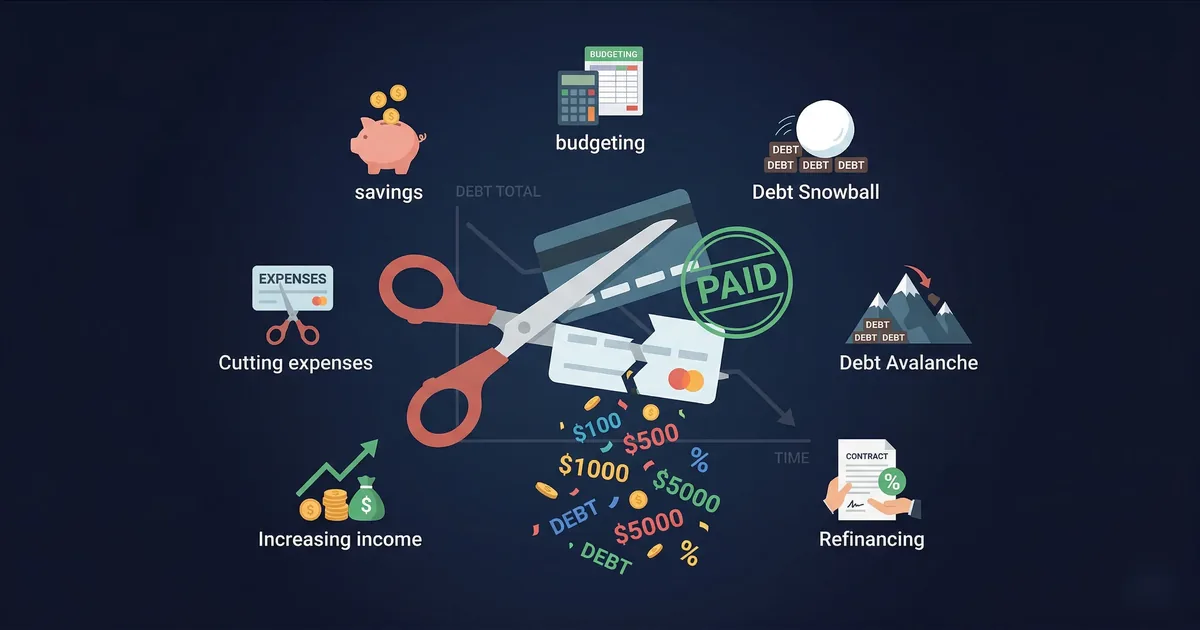
The average American carries $6,500 in credit card debt at an average interest rate near 20%. At minimum payments, that debt takes over a decade to pay off and costs thousands in interest alone. The math is brutal, but the solution is straightforward: pick a strategy, commit to it, and pay down your debt step by step.
Here are seven proven strategies, ranked from simplest to most aggressive. You do not need all seven — pick the two or three that fit your situation and get started.
The True Cost of Credit Card Debt
Before looking at strategies, understand what credit card debt actually costs you:
| Balance | APR | Minimum Payment | Time to Pay Off | Total Interest |
|---|---|---|---|---|
| $3,000 | 20% | $60/mo | 9+ years | $3,500 |
| $5,000 | 22% | $100/mo | 10+ years | $7,700 |
| $10,000 | 20% | $200/mo | 9+ years | $11,680 |
Paying only minimums means you pay more in interest than the original balance. Every extra dollar above the minimum goes directly to reducing principal.
7 Strategies to Pay Off Credit Card Debt
1. The Debt Avalanche (Highest Interest First)
Pay minimums on all cards. Put every extra dollar toward the card with the highest interest rate. When it is paid off, redirect that payment to the next highest rate card. This method saves the most money in total interest.
2. The Debt Snowball (Smallest Balance First)
Pay minimums on all cards. Put every extra dollar toward the card with the smallest balance. The quick wins build momentum and motivation. After each card is paid off, roll that payment into the next smallest balance.
3. Balance Transfer to 0% APR
Transfer high-interest balances to a card offering 0% APR for 12–21 months. This stops interest from adding up, so 100% of your payments go toward the principal. Be aware of balance transfer fees (typically 3–5%). Have a plan to pay off the balance before the promotional period ends.
4. Negotiate a Lower Interest Rate
Call your card issuer and ask for a rate reduction. If you have a good payment history, you have a strong case. Even reducing your rate from 22% to 16% saves thousands over the life of the debt. The worst they can say is no.
5. Cut Expenses and Redirect to Debt
Review your budget for non-essential expenses you can cut for now: streaming services, gym memberships, dining out. Redirect every saved dollar to your debt payments. Use Budgeting365 to identify where your money is going and find areas to cut.
6. Increase Your Income
Pick up a side hustle, sell unused items, or take on overtime. Dedicate 100% of additional income to debt payments. Earning more and spending less together helps you pay off debt much faster.
7. Consolidation Loan
Take out a personal loan at a lower interest rate to pay off all credit cards at once. You make one fixed monthly payment instead of managing multiple cards. This simplifies payments and typically saves on interest if you qualify for a rate below your current card APRs.
Debt Snowball vs. Debt Avalanche
| Factor | Debt Snowball | Debt Avalanche |
|---|---|---|
| Order | Smallest balance first | Highest rate first |
| Motivation | High (quick wins) | Lower (bigger debts take longer) |
| Interest Saved | Less optimal | Maximum savings |
| Best For | People who need momentum | People who are numbers-driven |
| Speed | Slightly slower overall | Fastest total payoff time |
The best method is the one you will stick with. If motivation is your challenge, choose snowball. If math drives you, choose avalanche. Both work far better than paying only minimums.
Create Your Debt Payoff Plan
Step 1: List All Debts
Write down every credit card balance, interest rate, and minimum payment. Total it up — look at the full number honestly.
Step 2: Choose Your Strategy
Pick snowball, avalanche, or a combination. Set your payoff order.
Step 3: Find Extra Money
Review your budget and find at least $100–$200 extra per month to put toward debt. More is better.
Step 4: Track Progress
Update your balances monthly and celebrate each card you pay off. Seeing progress keeps you going.
Step 5: Do Not Add New Debt
Stop using credit cards while paying them off. Switch to debit or cash for daily purchases. You cannot pay off debt while still adding more.
Track Your Debt Payoff Journey
Use Budgeting365 to track your loan balances, set debt payoff goals, and monitor your progress with visual tracking.
Download Budgeting365 — FreeFrequently Asked Questions
What is the fastest way to pay off credit card debt?
The debt avalanche (highest interest first) combined with cutting expenses and a 0% balance transfer creates the fastest mathematical payoff path.
Should I use the snowball or avalanche method?
Avalanche saves more on interest. Snowball provides quicker motivational wins. Choose snowball if you need momentum or avalanche if you are numbers-driven.
How long does it take to pay off $10,000 in credit card debt?
At 20% APR paying $200/month: about 9 years with $11,680 in interest. At $500/month: about 2 years with $2,100 in interest. A 0% balance transfer with $500/month payments: 20 months, zero interest.
Should I close credit cards after paying them off?
Generally no. Closing cards reduces available credit and can hurt your credit score. Keep them open with zero balance unless they charge annual fees.
Can I negotiate my credit card interest rate?
Yes. About 70% of people who call and ask receive some reduction. Even a few percentage points lower saves significant money.