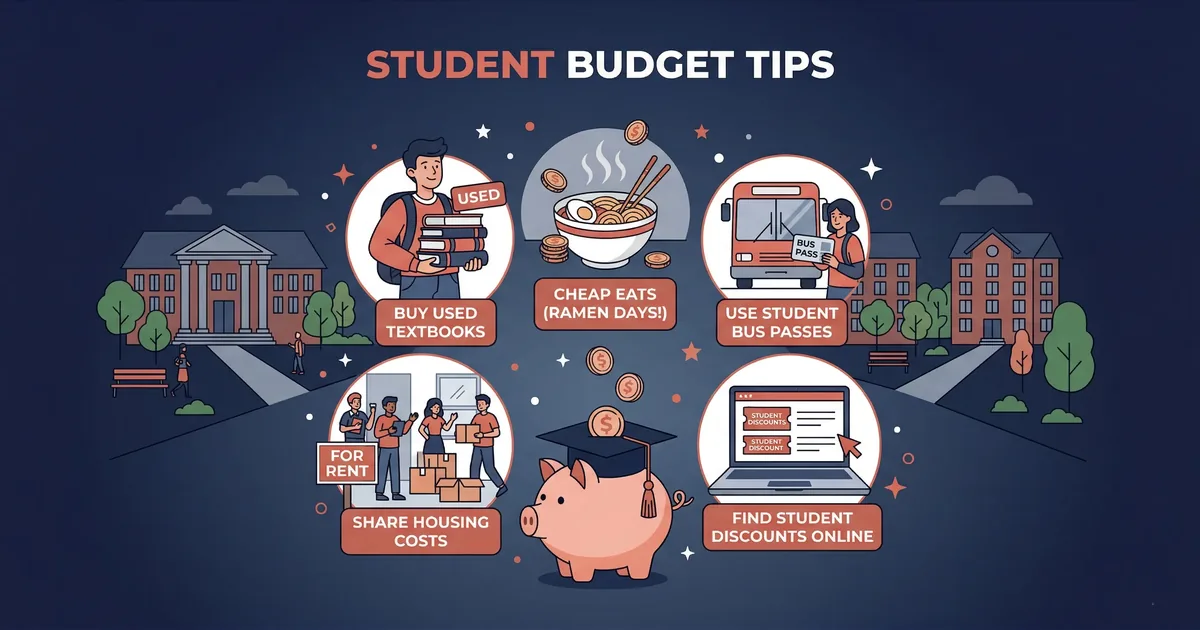
College is expensive enough without wasting money on costs you can avoid. These 25 tips can save students $2,000–$5,000 per year without missing out on the college experience.
Textbooks (Save $500–$1,000/Year)
- Rent instead of buy: Textbook rental sites cost 50–70% less than buying new
- Buy used or older editions: Previous editions are 80%+ cheaper and content is nearly identical
- Use the library reserve: Most professors place textbooks on 2-hour reserve at the campus library
- Share with classmates: Split the cost with a friend in the same class
- Check free resources first: OpenStax, Project Gutenberg, and professor-shared PDFs are free
Food & Dining (Save $100–$200/Month)
- Cook basic meals: Rice, beans, pasta, and eggs cost under $2 per meal
- Evaluate your meal plan: Calculate cost per meal — downgrade if you skip meals often
- Pack lunches: Bringing lunch saves $5–$10 per day vs. campus food
- Use a water bottle: $3–$5 daily on drinks adds up to $100/month
- Take advantage of free food: Campus events, club meetings, and study groups often provide free pizza and snacks
- Brew your own coffee: A $15 French press saves $80–$120/month vs. coffee shops
Housing & Utilities (Save $100–$300/Month)
- Get a roommate (or more): Splitting a 2-bedroom apartment 2 ways can save $300–$500/month vs. solo
- Live slightly off-campus: Apartments 10–15 minutes from campus can be 20–30% cheaper
- Reduce energy use: LED bulbs, power strips, and watching your heating and cooling cut utility bills
- Share streaming subscriptions: Family plans for Netflix, Spotify, and others cost a fraction per person
Lifestyle & Fun (Save $50–$150/Month)
- Use your student ID everywhere: Restaurants, movie theaters, museums, software, and retailers offer 10–20% student discounts
- Attend free campus events: Concerts, movie screenings, speakers, and festivals — your tuition already pays for them
- Use the campus gym: Included in tuition — cancel any outside gym membership
- Bike or walk: Save on gas, parking, and car maintenance
- Buy second-hand: Thrift stores, Facebook Marketplace, and campus swap groups for clothes, furniture, and supplies
- Use free software: Microsoft Office 365, Adobe Creative Cloud, and other premium software are often free through your university
Earning Extra Money
- Get an on-campus job: Flexible hours, no commute, and work-study positions may have tax benefits
- Tutor other students: $15–$30/hour for subjects you excel in
- Sell unused items: End-of-semester sales of textbooks, furniture, and electronics
- Freelance your skills: Writing, graphic design, web development, and social media management
Start Your Student Budget
Budgeting365 makes it easy to track student spending, set savings goals, and see where every dollar goes — free and offline.
Download Budgeting365 — FreeFrequently Asked Questions
How much should a college student save per month?
Even $50–$100/month builds a meaningful safety net. Aim for a $500–$1,000 emergency fund first.
What is the best student discount?
Amazon Prime Student (50% off), Spotify Student plan, and your school’s free software portal offer the highest value.
Should college students invest?
Build a $1,000 emergency fund first. Then even $25–$50/month invested gives you a massive compound interest advantage.
How can I earn money as a full-time student?
On-campus jobs, tutoring, freelancing, paid research studies, and selling items are all flexible around class schedules.
Is the meal plan worth it?
Calculate the per-meal cost. If over $8–$10 and you skip meals, cook instead. If under $8 and you eat consistently, it can be good value.