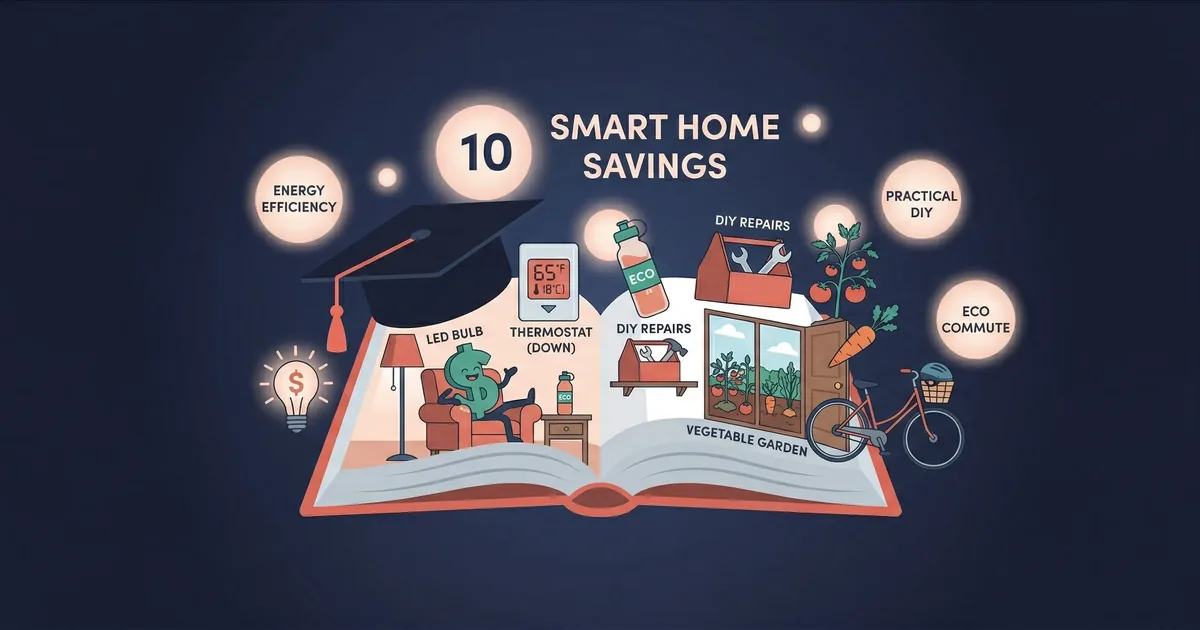
Frugal living is not about going without. It is about choosing where your money goes so you can spend more on what matters and less on what does not. These 25 tips can save you $300–$800 per month without feeling like sacrifice.
Food & Groceries (Save $150–$300/mo)
- Meal plan weekly: Plan meals around sales and what is already in your fridge. Saves $50–$100/month by reducing food waste and impulse buys.
- Cook in batches: Prepare 2–3 large meals on Sunday and eat leftovers throughout the week. Cheaper and faster than cooking daily.
- Pack lunch: Bringing lunch 5 days a week instead of buying saves $50–$75/month.
- Use a grocery list: Never shop without one. Impulse purchases add 20–40% to the average grocery bill.
- Buy store brands: Generic products are often identical to name brands at 20–30% less cost.
- Grow herbs: A $3 basil plant replaces $4 grocery store packages for months.
- Make coffee at home: A daily $5 coffee habit costs $1,825/year. Home coffee costs about $0.50 per cup.
Housing & Utilities (Save $80–$200/mo)
- Adjust your thermostat: Each degree adjustment saves 1–3% on energy bills. Use 68°F in winter, 78°F in summer.
- Use LED bulbs: LEDs use 75% less energy and last 25 times longer than incandescent bulbs.
- Unplug vampire electronics: Devices on standby use 5–10% of household electricity. Use power strips and switch them off.
- Negotiate rent: Long-term tenants have bargaining power. Ask about paying less rent in exchange for a longer lease.
- DIY basic repairs: YouTube tutorials can save hundreds on simple plumbing, electrical, and appliance fixes.
- Refinance if rates are lower: Dropping your mortgage rate by 1% on a $250,000 loan saves about $150/month.
Transportation (Save $50–$150/mo)
- Carpool or use transit: Sharing rides or taking public transit can save $200–$300/month compared to solo driving.
- Maintain your car: Regular oil changes, tire rotations, and air filter replacements prevent expensive repairs.
- Shop insurance annually: Car insurance rates vary dramatically. Comparing quotes each year can save $50–$100/month.
- Drive steady: Aggressive driving wastes 15–30% more fuel. Speed up slowly and slow down gently to save gas.
- Use gas price apps: Apps like GasBuddy find the cheapest stations nearby, saving $5–$15 per fill-up.
Lifestyle & Entertainment (Save $50–$150/mo)
- Audit subscriptions: The average household has 12 subscriptions. Cancel the ones you have not used in 30 days.
- Use the library: Free books, audiobooks, movies, magazines, and even streaming services through apps like Libby.
- Wait 30 days: Before any non-essential purchase over $50, wait 30 days. Most impulse urges disappear.
- Host potluck dinners: Having people over at home costs 70% less than eating out. Each person brings a dish.
- Unsubscribe from marketing emails: When you stop seeing ads, you stop wanting to buy. Fewer promotions means fewer temptations.
Mindset Shifts
- Calculate cost per use: A $100 jacket worn 100 times costs $1 per wear. A $30 jacket worn 5 times costs $6 per wear. Quality often saves money.
- Track every dollar: Awareness alone reduces spending. People who track expenses spend 10–15% less on average.
| Category | Monthly Savings Range |
|---|---|
| Food & Groceries | $150–$300 |
| Housing & Utilities | $80–$200 |
| Transportation | $50–$150 |
| Lifestyle & Entertainment | $50–$150 |
| Total Potential | $330–$800 |
Track Your Savings
Use Budgeting365 to track how much you save with frugal habits. Set savings goals, monitor categories, and watch your progress — free and offline.
Download Budgeting365 — FreeFrequently Asked Questions
Is frugal living the same as being cheap?
No. Frugal means choosing to spend on what matters. Cheap means always paying the least, no matter the quality or effect on others.
How much can frugal living save per month?
$300–$800/month depending on your current spending and how many changes you implement.
What is the 30-day rule?
Wait 30 days before any non-essential purchase. Most impulse urges fade and you save money on things you did not really need.
How do I start without burnout?
Start with 3–5 high-impact changes and add more gradually over months.
Can you live frugally and still enjoy life?
Absolutely. Frugal living redirects money from things that do not bring joy to things that do.