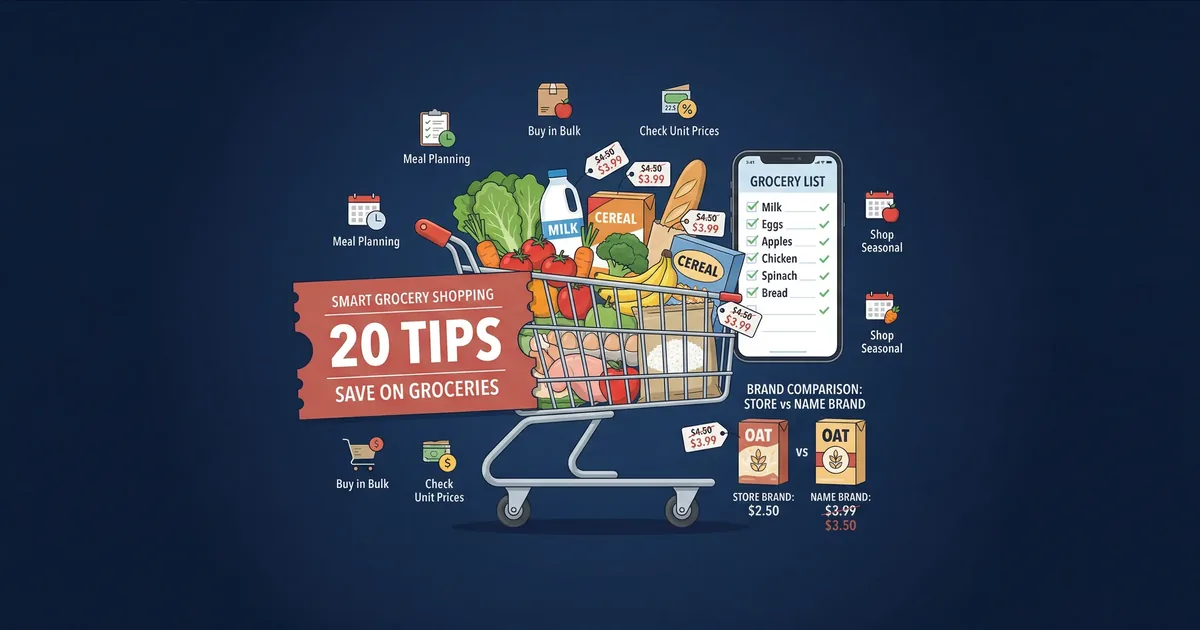
Groceries are one of the biggest variable expenses in any household budget — and one of the easiest to cut. According to the USDA’s Cost of Food reports, the average American family of four spends over $1,000 per month on food, but with smart strategies you can cut that by 20–30% without giving up good food.
These 20 tips are organized into three phases: before you shop, at the store, and at home. Start with just a few, then add more as they become habits.
Before You Shop (Planning Phase)
1. Meal Plan for the Week
Spend 20–30 minutes each weekend planning your meals for the week. Choose recipes that share ingredients (chicken for Monday stir-fry and Wednesday wraps, for example). Meal planning removes the daily stress of deciding what to cook. Without a plan, most people end up ordering takeout.
2. Shop From Your Pantry First
Before making your grocery list, check what you already have. Build at least two meals per week around ingredients in your fridge, freezer, and pantry. This alone can reduce your weekly grocery bill by 15%.
3. Make a Detailed Shopping List
Never enter a grocery store without a list. People who shop with a list spend 23% less than those who browse. Organize your list by store section to minimize wandering.
4. Set a Grocery Budget
Decide your weekly or monthly grocery budget and track it. If you haven’t already, create a monthly budget with a dedicated grocery category. Use Budgeting365 to set a spending limit and log trips in real time.
5. Check Sales Flyers and Apps
Glance at your store's weekly ad before planning meals. Build meals around discounted proteins and produce rather than paying full price for specific recipes.
6. Never Shop Hungry
Shopping on an empty stomach increases impulse purchases by up to 60%. Have a snack before heading to the store.
At the Store (Shopping Phase)
7. Buy Store Brands
Generic or store-brand products cost 20–40% less than name brands and are often made by the same manufacturers. Switch staples like canned goods, pasta, flour, sugar, and dairy to store brands.
8. Buy in Bulk (Strategically)
Bulk buying saves money on non-perishable items you use regularly: rice, beans, oats, pasta, canned tomatoes, and frozen vegetables. Avoid bulk buying perishables unless you can freeze them before they spoil.
9. Buy Seasonal Produce
In-season fruits and vegetables cost a fraction of out-of-season imports. Strawberries in June are half the price of strawberries in December. When produce is cheap and abundant, buy extra and freeze it.
10. Shop the Perimeter with Purpose
Fresh produce, dairy, and proteins are usually on the store perimeter. The center aisles contain more processed and marked-up items. Shop the perimeter first, then visit only the center aisles on your list.
11. Compare Price Per Unit
The shelf tag shows the price per ounce or per unit. Always compare this number rather than the total price. The larger package is not always cheaper per unit. Learning to distinguish needs from wants helps you skip expensive items when a cheaper option works just as well.
12. Choose Frozen Over Fresh (Sometimes)
Frozen fruits and vegetables are picked when fully ripe. They are often more nutritious than “fresh” produce that has spent days being shipped. They also last months instead of days, reducing waste.
13. Skip Pre-Cut and Pre-Packaged
Pre-sliced mushrooms, pre-shredded cheese, and salad kits cost 2–3 times more than whole versions. Spend a few extra minutes chopping to save significantly.
14. Shop at Discount Grocers
Stores like Aldi, Lidl, and WinCo consistently offer 20–30% lower prices than traditional supermarkets. Even occasional trips to discount grocers for staples can save hundreds per year.
At Home (Reducing Waste)
15. Cook in Batches
Batch cooking on weekends saves both time and money. Make large portions of soups, grains, and proteins, then portion into containers for the week. You are less likely to order takeout when a home-cooked meal needs only reheating.
16. Use Every Part of Ingredients
Vegetable scraps (onion ends, celery leaves, carrot peels) make excellent stock. Stale bread becomes breadcrumbs or croutons. Overripe bananas become banana bread. Creative use of scraps adds up to real savings.
17. Store Food Properly
Proper storage extends shelf life dramatically. Keep herbs in water like flowers and store berries unwashed until use. Freeze bread you will not eat within three days. Keep bananas separate from other fruit.
18. Practice First In, First Out
When you put away groceries, move older items to the front and place new purchases behind. This simple restaurant technique prevents food from expiring unnoticed in the back of your fridge.
19. Repurpose Leftovers
Roast chicken becomes chicken salad sandwiches. Leftover rice becomes fried rice. Wilting vegetables become soup. Plan your meals so leftovers from one meal feed into the next.
20. Track Your Food Waste
For one month, note every item you throw away. You will quickly identify patterns — maybe you always overbuy lettuce or forget about yogurt. Then change your shopping habits to match. Tracking your expenses alongside food waste gives you a complete picture of where grocery dollars actually go.
Monthly Grocery Budget Guide
| Household Size | Thrifty Plan | Moderate Plan | Liberal Plan |
|---|---|---|---|
| 1 person | $200–$250 | $300–$400 | $400–$500 |
| 2 people | $375–$475 | $550–$700 | $700–$900 |
| Family of 4 | $550–$700 | $800–$1,000 | $1,000–$1,300 |
These ranges are based on USDA food plans and adjusted for 2026 costs. Your actual budget depends on location, dietary needs, and local prices. For a complete plan, see our 50/30/20 budget rule guide to find out how much of your income should go toward food.
Track Your Grocery Spending
Set a grocery budget category in Budgeting365 and track every trip. See visual progress and get alerts before you overspend.
Download Budgeting365 — FreeFrequently Asked Questions
How much should I spend on groceries per month?
The USDA suggests a moderate grocery budget of $300–$400 per month for one person and $800–$1,000 for a family of four. Smart shopping can reduce these amounts by 20–30%.
Is meal planning really worth the effort?
Yes. Meal planning reduces food waste by up to 25% and cuts spending by 20% on average. Just 30 minutes of planning saves hours of stress and hundreds of dollars monthly.
Are store brands as good as name brands?
In most cases, yes. Store brands are often made by the same manufacturers but cost 20–40% less. Blind taste tests show most people cannot tell the difference for staple items.
What is the cheapest day to buy groceries?
Wednesday and Thursday tend to have the best deals as stores overlap weekly sales. Early morning also gives first pick of marked-down produce and bakery items.
How can I save without couponing?
Buy store brands, shop with a list, avoid impulse purchases, buy seasonal produce, cook from scratch, reduce food waste, and buy bulk non-perishables. These habits save more than couponing alone.