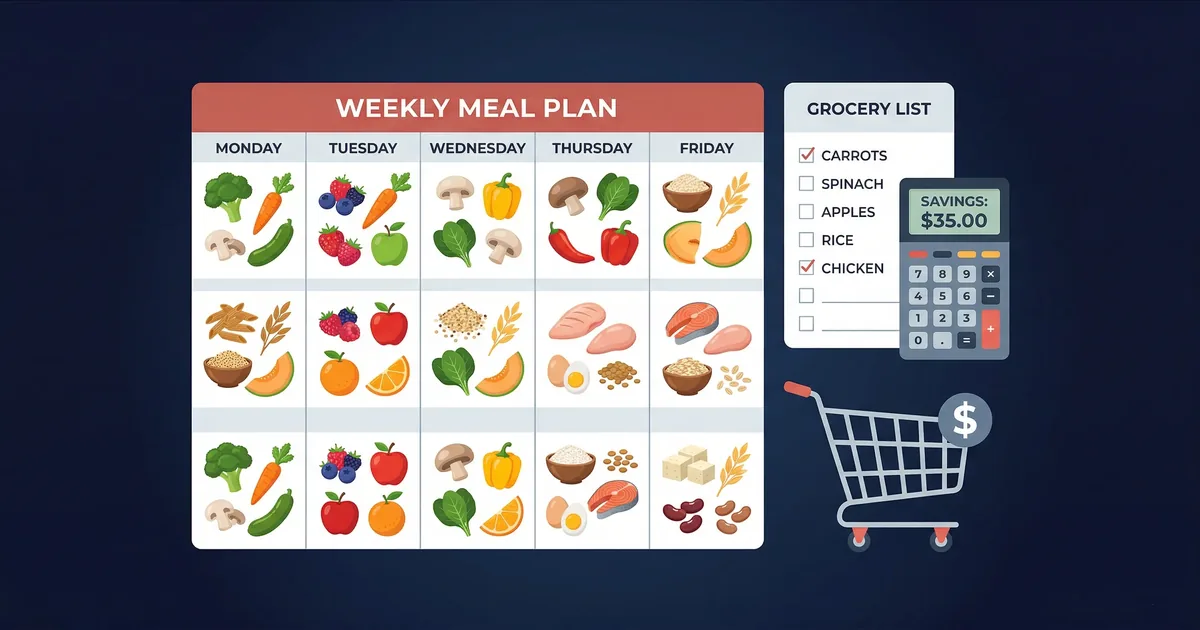
Food is the second or third largest expense for most households — and one of the easiest to cut. A simple weekly meal plan can save families $200–$400 per month. It cuts waste, reduces takeout, and helps you spend only on food you actually eat.
Why Meal Planning Saves Money
- Reduces food waste: The average household throws away $1,500 of food per year
- Eliminates impulse buys: A list keeps you focused at the store
- Cuts takeout: Having a plan means no “I do not know what to cook” moments
- Enables bulk buying: Knowing your week’s menu lets you buy the right amounts
- Uses ingredients fully: Plan multiple meals from the same proteins and vegetables
Budget Staple Foods
| Category | Budget Items | Cost Per Serving |
|---|---|---|
| Grains | Rice, oats, pasta, bread | $0.10–$0.30 |
| Protein | Eggs, beans, lentils, chicken thighs | $0.25–$0.75 |
| Vegetables | Potatoes, carrots, cabbage, onions, frozen mixed | $0.15–$0.40 |
| Dairy | Milk, yogurt, cheese (block, not shredded) | $0.20–$0.50 |
| Fruits | Bananas, apples, frozen berries, seasonal picks | $0.15–$0.40 |
| Pantry | Canned tomatoes, broth, peanut butter, flour | $0.05–$0.25 |
5-Step Meal Planning System
Step 1: Set Your Weekly Food Budget
Thrifty: $50–$60 • Low-cost: $65–$80 • Moderate: $80–$100 • Liberal: $100–$130
Step 2: Choose Your Meals
Plan 5–6 dinners (use leftovers one night), 7 breakfasts, and 5 lunches. Build meals around what is on sale this week.
- Pick 2–3 meatless meals (beans, lentils, eggs are cheaper than meat)
- Plan at least one “big batch” meal for lunch leftovers (soup, stew, casserole)
- Reuse ingredients: buy a whole chicken for roast dinner + chicken soup later
Step 3: Build Your Grocery List
Write your list organized by store section. Check your pantry, fridge, and freezer first — do not buy what you already have. Stick to the list at the store.
Step 4: Shop Smart
- Shop once per week (fewer trips = less impulse buying)
- Buy store brands (20–40% cheaper, same quality)
- Buy in-season produce (50% cheaper than out-of-season)
- Use the unit price to compare value (price per ounce)
- Buy frozen vegetables — same nutrition, lower cost, no waste
Step 5: Batch Cook on Sunday
Spend 2–3 hours on Sunday to prep the week:
- Cook a large pot of rice or grain
- Prepare a big-batch soup, stew, or casserole
- Chop vegetables for the week
- Cook and portion proteins
- Prep breakfast items (overnight oats, muffin batter)
Sample Weekly Meal Plan ($60 for Two People)
| Day | Breakfast | Lunch | Dinner |
|---|---|---|---|
| Monday | Oatmeal + banana | Bean soup + bread | Chicken stir-fry + rice |
| Tuesday | Eggs + toast | Stir-fry leftovers | Pasta + marinara + salad |
| Wednesday | Yogurt + granola | Pasta leftovers | Lentil curry + rice |
| Thursday | Oatmeal + apple | Lentil curry leftovers | Baked potatoes + toppings |
| Friday | Eggs + toast | Potato soup (from extras) | Fried rice + vegetables |
| Saturday | Pancakes | Sandwiches | Bean tacos + salsa |
| Sunday | Oatmeal + berries | Taco leftovers | Batch cook: chicken soup |
10 Smart Shopping Tips
- Never shop hungry — you will spend 10–20% more
- Buy whole, not pre-cut — a whole chicken costs 40% less per pound than breasts
- Check clearance sections — day-old bread and nearly-expired dairy are perfectly good
- Stock up on sales — when staples go on sale, buy 2–4 weeks' worth
- Skip convenience items — pre-shredded cheese, pre-cut vegetables cost 2–3x more
- Use store loyalty programs — free savings with no extra effort
- Buy frozen fruits and vegetables — cheaper, longer lasting, equally nutritious
- Compare stores — discount grocers (Aldi, Lidl) save 20–30% over regular stores
- Avoid single-serve packaging — buy family size and portion yourself
- Track your spending — know exactly how much you spend on food each week
Track Your Grocery Budget
Use Budgeting365 to set a weekly food budget, track grocery spending, and see exactly where your food money goes — free and offline.
Download Budgeting365 — FreeFrequently Asked Questions
How much can meal planning save per month?
Most families save $200–$400/month by reducing waste, impulse buys, and takeout.
How do I meal plan on a tight budget?
Build meals around cheap staples (rice, beans, eggs, pasta, seasonal vegetables). Plan 2–3 meatless dinners per week and cook in batches.
What is the cheapest healthy meal?
Rice and beans with vegetables at about $0.50–$1.00 per serving. Also: lentil soup, egg fried rice, and baked potatoes.
How much time does meal planning take?
About 20–30 minutes of planning per week, plus 2–3 hours of batch cooking on weekends.
Should I prep all meals for the whole week?
Full prep works for breakfasts and lunches. For dinners, prep 3–4 days at a time or do partial prep (chop veggies, cook grains ahead).