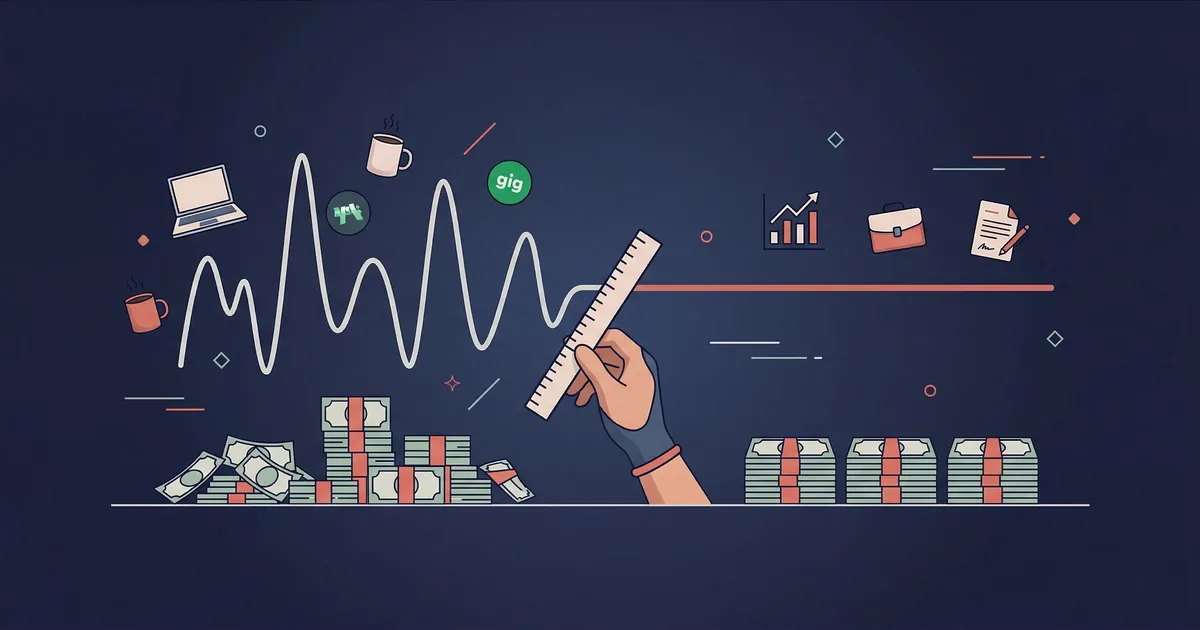
Over 59 million Americans freelance or hold gig work. Traditional budgeting advice is made for a steady paycheck. When your income changes every month, you need a different approach. Here are strategies that work.
The Variable Income Challenge
Irregular income creates two core problems:
- Feast-or-famine cycles: High-earning months tempt you to overspend; low months create panic.
- Unpredictable timing: Clients pay late, gig demand fluctuates, commissions vary.
The solution is to build systems that balance the high and low months.
The Baseline Budget Method
- Calculate your baseline: Look at your income for the past 12 months and find the lowest month. That is your baseline.
- Build your essential budget: Fit all must-pay expenses within your baseline income.
- Create a priority list: Rank everything above essentials in order of importance.
- Fund from the top: In good months, fund priorities in order until the money runs out.
| Month | Income | Essentials ($2,400) | Surplus |
|---|---|---|---|
| January | $3,800 | $2,400 | $1,400 |
| February | $2,500 | $2,400 | $100 |
| March | $5,200 | $2,400 | $2,800 |
| April | $2,800 | $2,400 | $400 |
Priority-Based Spending
Once essentials are covered, use the extra money in this order:
- Taxes (25–30% of gross income)
- Buffer account (until 2 months of expenses saved)
- Emergency fund contributions
- Debt payments above minimums
- Retirement savings
- Sinking funds (insurance, car repairs, etc.)
- Lifestyle upgrades and fun spending
Building a Buffer Account
A buffer account is different from an emergency fund. It holds 1–2 months of expenses and evens out changes in your income.
How It Works
- All income goes into the buffer account first.
- On the 1st of each month, transfer a fixed “salary” to your checking account.
- Budget from the fixed salary, not from actual income.
- The buffer absorbs high and low months automatically.
This is the single most powerful strategy for variable-income budgeting. It turns changing income into a steady paycheck.
Handling Taxes as a Freelancer
- Set aside 25–30% immediately: Every time you receive a payment, move 25–30% to a dedicated tax savings account.
- Make quarterly estimated payments: Due January 15, April 15, June 15, and September 15.
- Track every expense: Business expenses reduce your taxable income. Keep receipts and categorize everything.
- Consider an S-Corp: If you regularly earn over $50,000, an S-Corp setup can lower your self-employment tax.
Budget Your Variable Income
Budgeting365 makes tracking irregular income simple with flexible budget categories and envelope-style tracking — free and offline.
Download Budgeting365 — FreeFrequently Asked Questions
How do I budget when my income changes every month?
Use the baseline method: budget essentials around your lowest-earning month, then prioritize surplus spending in good months.
How big should a freelancer's emergency fund be?
6–12 months of expenses, since variable income means longer potential gaps between paychecks.
Should freelancers pay themselves a salary?
Yes. Deposit all income into a business account and transfer a fixed monthly amount to personal checking.
How do I handle taxes with irregular income?
Set aside 25–30% of every payment immediately and make quarterly estimated tax payments.
What budgeting method works best for variable income?
Zero-based budgeting combined with a priority list ensures essentials always get funded first.