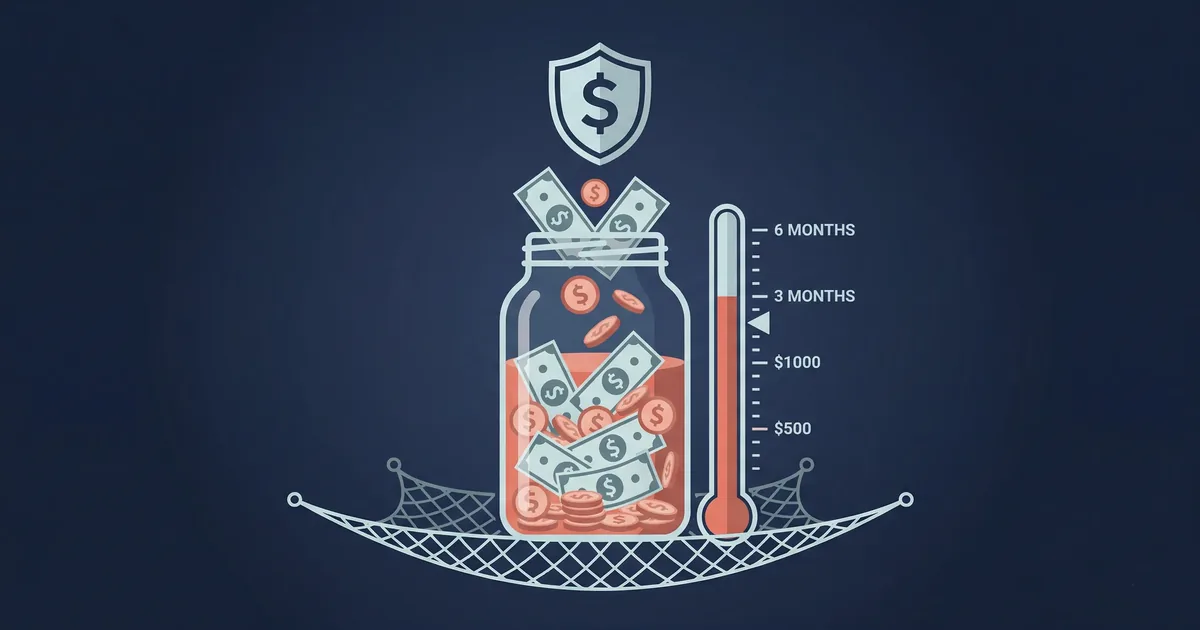
Life is unpredictable. A car breakdown, a medical bill, or a sudden job loss can damage your finances overnight. An emergency fund is the savings that protect you from going into debt when something unexpected happens. Yet studies show that nearly 56% of Americans cannot cover a $1,000 emergency expense with savings.
If you are starting from zero, do not worry. This guide shows you how to build an emergency fund step by step. You will learn how much you need, where to keep it, and simple ways to reach your goal faster.
What Is an Emergency Fund?
An emergency fund is a separate amount of money saved only for unplanned, urgent expenses. It is not your vacation fund, not your new-phone fund, and not your holiday shopping savings. It exists for one purpose: to protect you from financial disaster when life surprises you.
Think of it as self-insurance. Instead of going into credit card debt at 20%+ interest when your furnace breaks in January, you simply transfer money from your emergency savings to cover the repair. No stress, no interest payments, no setbacks to your financial goals.
How Much Do You Need?
The standard advice is to save 3 to 6 months of essential living expenses. Not 3 to 6 months of income — just the amount you need to cover your must-pay bills: rent, groceries, utilities, insurance, transportation, and minimum debt payments.
Calculate Your Target
| Monthly Essential Expense | Example Amount |
|---|---|
| Rent / Mortgage | $1,200 |
| Groceries | $350 |
| Utilities | $150 |
| Transportation | $200 |
| Insurance | $100 |
| Monthly Total | $2,000 |
| 3-Month Fund | $6,000 |
| 6-Month Fund | $12,000 |
Who Needs More?
Your ideal target depends on your situation:
- Single income household: Aim for 6 months since there is no second income. See our single-income family budget guide
- Freelancers or gig workers: 6 to 12 months because income is uneven. Learn to budget on irregular income
- Dual income, no dependents: 3 months may be sufficient
- Parents with dependents: 6 months minimum
- Homeowners: Add extra for potential home repairs
Where to Keep Your Emergency Fund
Your emergency fund needs to be liquid (easy to access), safe (no risk of losing value), and separate (not mixed with daily spending money). The best option for most people:
- High-yield savings account (HYSA): Earns 4-5% APY at online banks while remaining fully accessible. This is the best choice for emergency funds.
- Money market account: Similar to HYSA with slightly different features. Usually offers check-writing ability.
- Separate bank entirely: Opening your emergency fund at a different bank than your checking account makes it harder to spend on impulse.
Avoid keeping your emergency fund in CDs (penalties for early withdrawal), stocks (value goes up and down), or under your mattress (earns nothing and is not insured).
7 Steps to Build Your Emergency Fund
Step 1: Set a Starter Goal of $1,000
A full 3-6 month fund can feel too big when you are starting from zero. Instead, focus on a mini emergency fund of $1,000 first. This covers most common emergencies like a car repair or a medical copay and gives you an immediate sense of financial security.
Step 2: Calculate Your Monthly Savings Target
Decide how much you can really save each month. Even $50 per month is progress. With $100 per month, you will hit $1,000 in just 10 months. With $200, you reach it in 5 months. The key is choosing an amount you can sustain consistently.
Step 3: Open a Separate Savings Account
Do not keep your emergency fund in your checking account. Open a dedicated high-yield savings account and name it "Emergency Fund." Keeping it separate makes you far less likely to spend it on non-emergencies.
Step 4: Automate Your Transfers
Set up an automatic transfer from your checking account to your emergency fund on each payday. When saving is automatic, you do not have to decide each month. That means you will not skip months. Treat your emergency fund contribution like a bill that must be paid.
Step 5: Direct Windfalls to Your Fund
Tax refunds, birthday money, work bonuses, and cash gifts are great ways to save faster. Plan to put at least 50% of any unexpected income into your emergency fund until you reach your goal.
Step 6: Cut One Expense and Redirect It
Cancel one subscription you rarely use, eat out one fewer time per week, or switch to a cheaper phone plan. Move the money you save into your emergency fund. Even $30 per month from a canceled subscription adds $360 per year.
Step 7: Scale Up to Your Full Target
Once you hit $1,000, celebrate that milestone, then aim for the full 3-6 month fund. At this point you have proven you can save consistently. Increase your automatic transfer if possible and keep going until you reach your target.
Tips to Build Your Fund Faster
- Use a visual tracker: Seeing your progress motivates you. Use Budgeting365 to set a savings goal with visual progress rings.
- Try a savings challenge: The 52-week challenge starts at $1/week and increases by $1 each week, totaling $1,378 in a year.
- Sell unused items: Old electronics, clothing, and furniture can quickly add hundreds to your fund.
- Pick up a temporary side gig: Dedicate all side income to the emergency fund until it is fully funded.
- Round up purchases: Some banks offer round-up programs that deposit spare change into savings.
Common Mistakes to Avoid
- Using it for non-emergencies: A sale on furniture is not an emergency. Define strict rules for when you can tap the fund.
- Keeping it too accessible: If your emergency fund is one tap away in your checking app, you will be tempted. Use a separate bank.
- Not replenishing after use: If you use part of your fund for a real emergency, prioritize building it back up immediately.
- Waiting for the perfect time: There is never a perfect time to start saving. Start with whatever amount you can, even if it is $20 per month.
- Investing your emergency fund: Emergency money should not be in stocks. You cannot afford for it to lose 30% of its value right when you need it.
Track Your Emergency Fund Progress
Set a savings goal in Budgeting365 and watch your emergency fund grow with visual progress tracking and milestone alerts.
Download Budgeting365 — FreeFrequently Asked Questions
How much should I have in my emergency fund?
Most financial experts recommend 3 to 6 months of essential living expenses. If you have dependents or irregular income, aim for 6 to 12 months. Start with a mini goal of $1,000 and build from there.
Where should I keep my emergency fund?
Keep it in a high-yield savings account that is FDIC insured. It should be easily accessible but separate from your daily checking account to reduce the temptation to spend it.
How long does it take to build an emergency fund?
It depends on your savings rate. Saving $200 per month, you can build a $1,000 starter fund in 5 months and a full 3-month fund of $6,000 in about 2.5 years. Automating transfers speeds the process.
Should I pay off debt or build an emergency fund first?
Build a mini emergency fund of $1,000 first, then focus on paying off high-interest debt. Without any emergency savings, unexpected expenses will push you further into debt.
What counts as an emergency expense?
True emergencies include unexpected medical bills, urgent car repairs needed for work, job loss, emergency home repairs, and unplanned travel for family crises. Planned expenses and shopping sales are not emergencies.