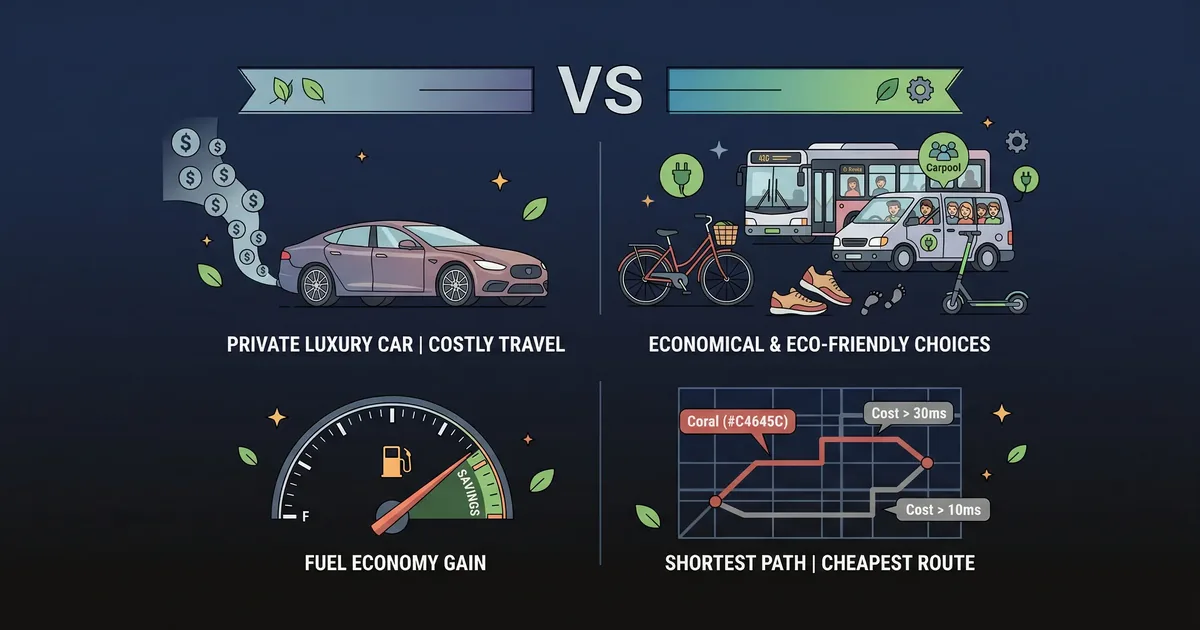
Transportation is the second-largest household expense in the U.S., averaging $12,300 per year. That is over $1,000 per month — and much of it can be lowered with smart choices.
Where Your Transportation Money Goes
| Expense | Average Annual Cost | Monthly |
|---|---|---|
| Car payment | $5,400 | $450 |
| Gas | $2,100 | $175 |
| Car insurance | $1,800 | $150 |
| Maintenance & repairs | $1,200 | $100 |
| Registration, taxes, fees | $800 | $67 |
| Parking & tolls | $1,000 | $83 |
| Total | $12,300 | $1,025 |
Save on Gas (Tips 1–5)
1. Use Gas Price Apps
GasBuddy and similar apps show you the cheapest stations nearby. Prices can vary $0.30–$0.50 per gallon within the same area. On a 15-gallon fill-up, that is $4.50–$7.50 savings per tank.
2. Drive Smoothly
Aggressive driving (speeding, rapid acceleration, hard braking) wastes 15–33% more fuel. Keep a steady speed and slow down early for stops.
3. Keep Tires Inflated
Under-inflated tires reduce fuel efficiency by 0.2% for every 1 PSI drop. Check monthly and inflate to the manufacturer’s recommendation (found on the door jamb sticker).
4. Remove Excess Weight
Every 100 lbs of extra weight reduces fuel economy by about 1%. Clean out your trunk and remove unused roof racks.
5. Use Rewards Credit Cards for Gas
Some cards offer 3–5% back on gas purchases. On $175/month in gas, that is $63–$105/year back. Pay the balance in full to avoid interest.
Save on Car Costs (Tips 6–10)
6. Buy Used Instead of New
New cars lose 20–30% of their value in the first year. A 2–3 year old certified pre-owned car gives you reliability for much less money. Save $5,000–$15,000 on purchase price alone.
7. Shop Car Insurance Annually
Rates are very different between insurers. Get quotes from 3–5 companies every 6–12 months. Average savings: $300–$800/year.
8. Do Basic Maintenance Yourself
Air filters ($15 vs $50 at shop), wiper blades ($20 vs $60), and topping off fluids are easy DIY tasks. YouTube has tutorials for nearly every car model.
9. Follow the Maintenance Schedule
Preventive maintenance (oil changes, timing belts, brake pads) costs far less than emergency repairs. A $30 oil change prevents a $4,000 engine replacement.
10. Refinance Your Car Loan
If your credit improved since buying, refinancing can save $50–$150/month. Check rates at credit unions — they typically offer the best auto loan rates.
Commuting Savings (Tips 11–15)
11. Carpool
Splitting the commute with one coworker saves roughly $1,800/year in gas. With two, savings jump to $2,400+. Many employers offer carpool matching programs.
12. Use Public Transit
A monthly bus/train pass ($75–$150) can replace a car entirely in city areas, saving $800+/month vs. car ownership.
13. Work from Home
Even 2 days per week of remote work cuts commuting costs by 40%. That is $400+/year in gas alone, plus reduced wear on your vehicle.
14. Bike or Walk Short Trips
Nearly 50% of car trips in the U.S. are under 3 miles — easily walkable or bikeable. Zero fuel cost, plus health benefits.
15. Batch Errands
Plan all errands for one day each week. Use one route instead of making separate trips. Reduces mileage by 20–30%.
Track Transportation Spending
Use Budgeting365 to categorize and track every transportation expense — gas, insurance, maintenance, and more. Free, offline, AES-256 encrypted.
Download Budgeting365 — FreeFrequently Asked Questions
How much does the average American spend on transportation?
About $12,300/year ($1,025/month), making it the second-largest expense after housing.
Is it cheaper to own a car or use rideshare?
If you drive under 5,000–7,000 miles/year, rideshare and transit may be cheaper. Daily commuters usually benefit from owning an economical used car.
How much can I save by carpooling?
Splitting with one person saves roughly $1,800/year. With three, savings exceed $2,400/year.
Does driving speed affect gas costs?
Yes. Driving 65 mph vs. 75 mph saves 10–15% on fuel. Smooth, steady driving is most efficient.
How often should I shop for car insurance?
Every 6–12 months. Most people save $300–$800/year just by switching.