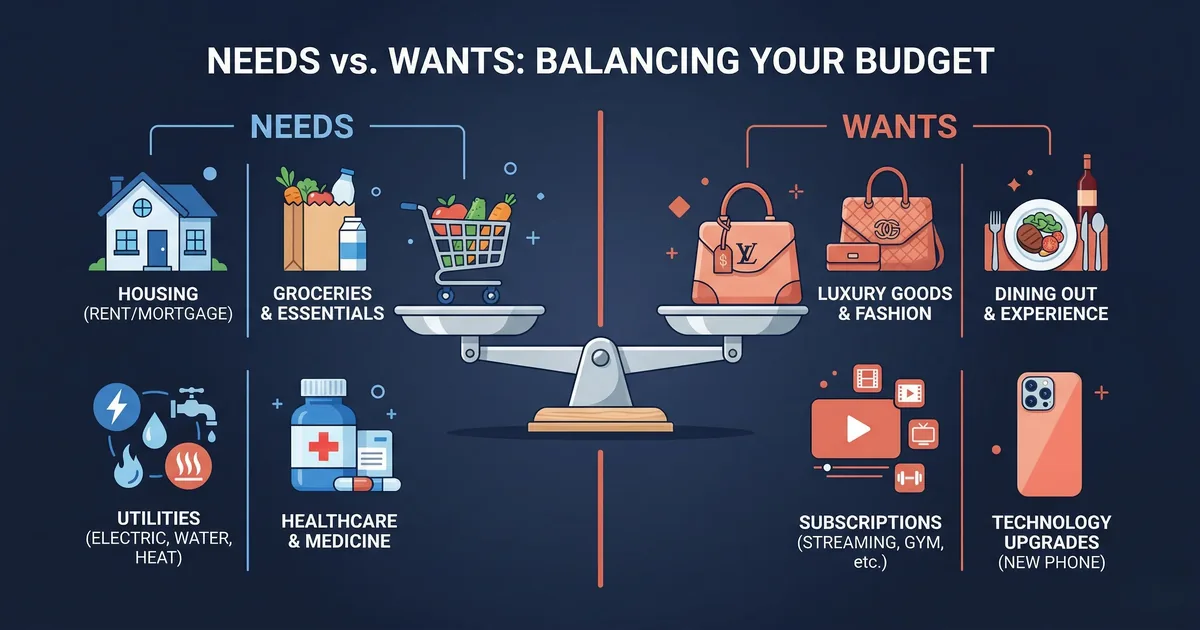
Knowing the difference between needs and wants is the foundation of every successful budget. It sounds simple, but modern marketing, social pressure, and lifestyle inflation make the line harder to see. This guide gives you a practical framework.
Defining Needs and Wants
Want: An expense that enhances your life or provides comfort/pleasure but is not strictly required. You could live without it.
Real-World Examples
| Category | Need | Want |
|---|---|---|
| Housing | Safe apartment or home | Luxury condo, extra bedroom |
| Food | Groceries for home cooking | Restaurant dining, takeout |
| Clothing | Basic weather-appropriate clothes | Designer brands, trend pieces |
| Transportation | Reliable car or transit pass | Brand-new luxury vehicle |
| Communication | Basic smartphone + plan | Latest iPhone Pro, unlimited data |
| Healthcare | Insurance, medications, checkups | Cosmetic procedures, premium gym |
| Education | Required courses and materials | Expensive tutors when free help exists |
| Entertainment | Free activities, library | Concert tickets, streaming bundles |
The Gray Area
Many expenses fall between needs and wants. The key is recognizing the basic version (need) vs. the premium version (want).
| Expense | Need (Basic) | Want (Premium) | Difference |
|---|---|---|---|
| Internet | 25 Mbps plan ($40) | 1 Gbps plan ($80) | $40/mo |
| Phone | Older model ($200) | Flagship ($1,200) | $1,000 |
| Coffee | Home brew ($0.30) | Café latte ($5.50) | $5.20/day |
| Car | Used reliable ($15K) | New SUV ($45K) | $30,000 |
| Gym | Home workouts (free) | Boutique studio ($150/mo) | $1,800/yr |
The 4-Question Decision Framework
Before any purchase over $20, ask yourself these four questions:
- Can I survive without this? If yes, it is probably a want.
- Is there a cheaper option that does the same job? If yes, the premium version is a want.
- Am I buying this because of emotion, social pressure, or habit? If yes, pause 24–48 hours.
- Does this align with my financial goals? If buying this delays an important goal, reconsider.
Applying to Your Budget
The 50/30/20 Connection
The 50/30/20 budget rule directly maps to needs vs. wants:
| Category | % of Income | Type |
|---|---|---|
| Needs | 50% | Housing, food, transport, insurance, minimum debt payments |
| Wants | 30% | Dining, entertainment, hobbies, shopping, upgrades |
| Savings & Debt | 20% | Emergency fund, investments, extra debt payments |
When Needs Exceed 50%
If your needs take up more than 50% of income, look for ways to reduce them:
- Get a roommate to split housing costs
- Refinance loans for lower payments
- Switch to a cheaper phone or insurance plan
- Cook at home instead of buying prepared food
- Use public transit instead of a car payment
Guilt-Free Spending on Wants
The goal is not to eliminate wants — it is to be intentional about them. When you have budgeted for wants and your needs, savings, and debt payments are covered, spending on things you enjoy is responsible, not wasteful.
Categorize Your Spending
Budgeting365 helps you tag every expense as a need or want, so you always know where your money is going — free and offline.
Download Budgeting365 — FreeFrequently Asked Questions
What is the difference between a need and a want?
A need is essential for survival or basic functioning. A want improves quality of life but is not required.
Is internet a need or a want?
Basic internet is a need for work and communication. A premium high-speed plan is a want if basic service suffices.
Can a want become a need?
Yes. A car is a want near public transit but a need in rural areas. Context determines classification.
How do I stop spending on wants?
Do not eliminate all wants. Budget a set amount, use a 24–48 hour waiting period for impulse buys, and prioritize wants that bring lasting satisfaction.
Should I feel guilty about spending on wants?
No. When needs are met, savings are on track, and debts are managed, budgeted spending on wants is perfectly responsible.