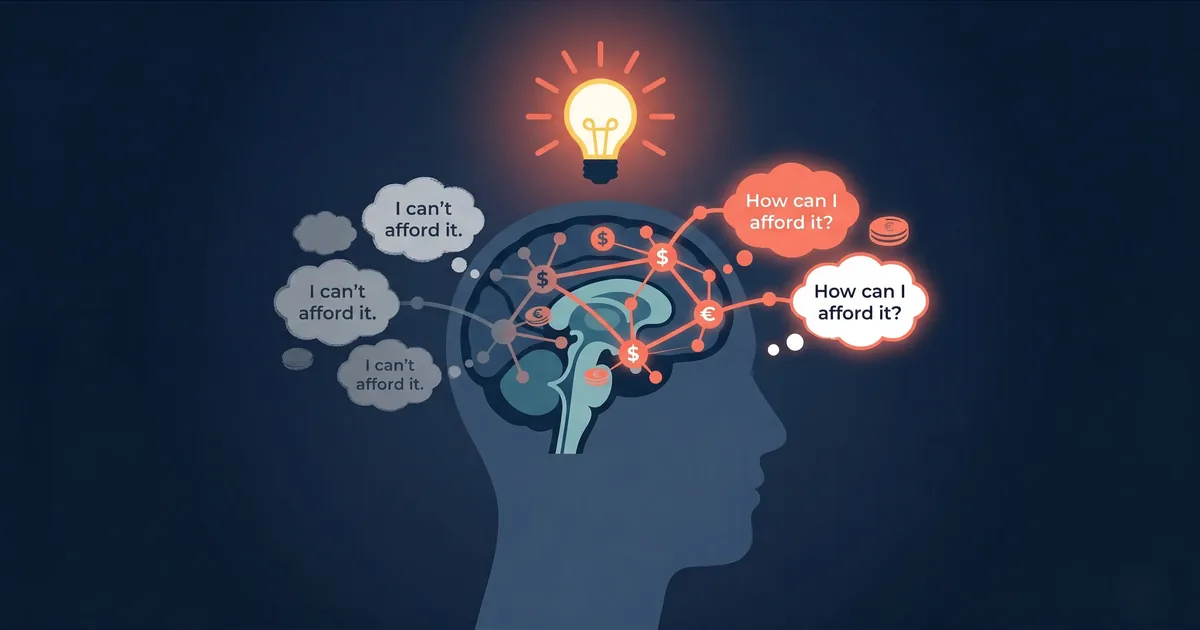
Your biggest financial asset isn’t your income, investments, or savings — it’s your money mindset. The beliefs you have about money shape every financial decision you make. They affect how much you earn and how much you keep.
What Is a Money Mindset?
Your money mindset is the collection of beliefs, attitudes, and assumptions you hold about money. It’s shaped by your upbringing, culture, experiences, and the messages you heard about money while growing up.
Scarcity vs. Abundance Mindset
| Scarcity Mindset | Abundance Mindset |
|---|---|
| “There’s never enough money” | “I can always find ways to earn more” |
| “Rich people are greedy” | “Wealth is a tool for good” |
| “I don’t deserve nice things” | “I deserve what I work for” |
| “Money is the root of all evil” | “Money amplifies who you already are” |
| Hoards out of fear | Saves with intention |
| Avoids financial conversations | Openly discusses money |
| Feels guilty spending | Spends intentionally without guilt |
Common Limiting Money Beliefs
| Limiting Belief | Reframe |
|---|---|
| “I’m bad with money” | “I’m learning to manage money better” |
| “I’ll never be able to save” | “I can start saving any amount today” |
| “Money causes stress” | “Lack of a plan causes stress” |
| “I don’t earn enough” | “I manage what I have and grow from here” |
| “Debt is normal” | “Debt is a choice I can change” |
| “I’ll deal with it later” | “Every day I wait costs money” |
How to Shift Your Money Mindset (7 Steps)
- Identify your money story: What did your parents say about money? What money memories shaped you? Write them down.
- Recognize patterns: Do you overspend when stressed? Avoid checking accounts? Impulse-buy to feel better?
- Challenge beliefs: For each limiting belief, ask “Is this actually true? Where’s the evidence?”
- Replace with empowering beliefs: Write new beliefs and read them daily until they become automatic.
- Take one action: Mindset shift requires action. Open a savings account, make a budget, or automate a transfer — today.
- Surround yourself with growth: Read personal finance books, listen to podcasts, follow financially healthy people.
- Celebrate wins: Paid off a debt? Saved $100? Hit a goal? Acknowledge it. Positive reinforcement builds positive habits.
Daily Mindset Practices
- Money journal: Spend 5 minutes writing about your financial feelings, fears, or gratitude
- Affirmations: “I am capable of building wealth.” “Money flows to me because I add value.”
- Track spending mindfully: Review each purchase without judgment — just awareness
- Gratitude practice: List 3 things you’re financially grateful for today
- Learn something new: Read one article, listen to one podcast episode about money
- Visualize goals: Spend 2 minutes imagining life with your financial goals achieved
Build Better Money Habits
Budgeting365 helps you put mindset into action — track spending, set goals, and build awareness of your money habits. Free, offline, AES-256 encrypted.
Download Budgeting365 — FreeFrequently Asked Questions
What is a money mindset?
Your beliefs, attitudes, and assumptions about money — shaped by upbringing and experiences. It determines how you earn, spend, save, and invest.
How do I know if I have a scarcity mindset?
Signs: constant money worry regardless of income, guilt about spending, believing wealthy people are greedy, hoarding money from fear, avoiding bank statements.
Can I change my money mindset?
Yes. Money mindset is learned, so it can be unlearned. Identify limiting beliefs, understand their origin, and replace them with empowering ones.
How does childhood affect money mindset?
Children absorb money attitudes from parents. If money caused family conflict, you may associate it with stress. Recognizing inherited patterns is step one.
What’s the difference between frugal and cheap?
Frugal = intentional spending on what matters. Cheap = minimizing cost at all costs, even sacrificing quality and relationships. A healthy mindset embraces frugality.