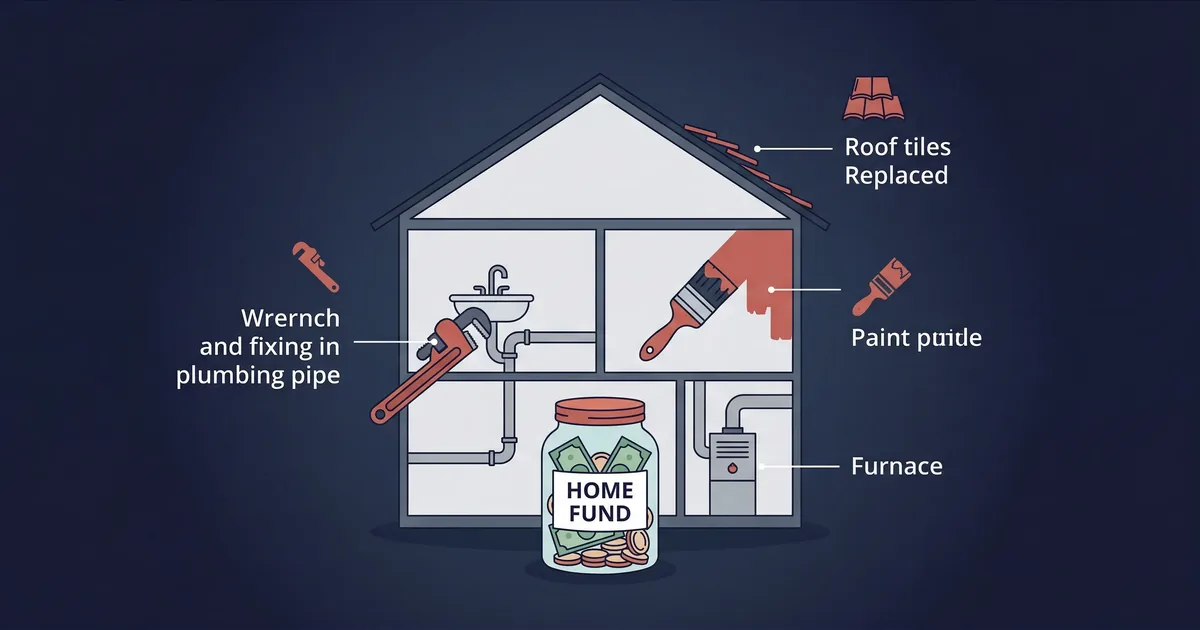
Homeownership comes with hidden costs that surprise many first-time buyers. The average homeowner spends $3,000–$7,500 per year on maintenance and repairs. Without a plan, a single emergency repair can break your entire budget.
The True Cost of Homeownership
Beyond your mortgage payment, home costs include maintenance, repairs, insurance, property taxes, and utilities. Maintenance and repairs alone typically add 1–4% of your home’s value each year.
Budgeting Rules for Home Maintenance
| Rule | Formula | Example ($300K Home) |
|---|---|---|
| 1% Rule | 1% of home value per year | $3,000/yr ($250/mo) |
| Square Footage Rule | $1 per sq ft per year | $2,000/yr (2,000 sq ft) |
| 10% Rule | 10% of monthly housing costs | $200/mo |
| 2% Rule (Older Homes) | 2% of home value per year | $6,000/yr ($500/mo) |
Start with the 1% rule for newer homes (under 10 years). Use the 2% rule for homes 20+ years old.
Common Repair Costs
| Repair | Average Cost | Lifespan |
|---|---|---|
| Roof replacement | $5,000–$15,000 | 20–30 years |
| HVAC system | $4,000–$12,000 | 15–25 years |
| Water heater | $1,000–$3,500 | 8–12 years |
| Exterior paint | $3,000–$6,000 | 7–10 years |
| Appliance replacement | $500–$2,500 each | 10–15 years |
| Plumbing repair | $200–$5,000 | Varies |
| Electrical repair | $200–$4,000 | Varies |
| Foundation repair | $5,000–$30,000 | One-time fix |
Annual Maintenance Schedule
Spring
- Inspect roof for winter damage
- Clean gutters and downspouts
- Service AC unit before summer
- Check exterior caulking and paint
- Test smoke and CO detectors
Summer
- Power wash deck and siding
- Inspect and repair fencing
- Check sprinkler system
- Trim trees away from house
Fall
- Service furnace before winter
- Clean gutters again (leaves)
- Seal driveway cracks
- Insulate exposed pipes
- Reverse ceiling fan direction
Winter
- Check for ice dams and drafts
- Replace furnace filters monthly
- Test sump pump
- Monitor for frozen pipes
Building a Home Repair Fund
- Open a separate savings account: High-yield savings, labeled “Home Repairs.” Keeps the money visible but separate from daily spending.
- Automate monthly transfers: Set up auto-transfer on payday. Even $150/month becomes $1,800/year.
- Start with the 1% target: Divide 1% of your home’s value by 12 for your monthly contribution.
- Build a baseline: Before touching the fund, build at least $2,000–$5,000 as a buffer.
- Track the balance: Use Budgeting365 to track deposits and withdrawals against your maintenance category.
Saving Money on Repairs
- Preventive maintenance: A $100 yearly HVAC tune-up prevents a $5,000 replacement
- Learn basic DIY: Painting, caulking, replacing fixtures, and unclogging drains save hundreds
- Get 3 quotes: Always compare at least 3 contractors for major work
- Shop materials yourself: Buy supplies from wholesale or discount stores
- Schedule off-season: Roofers and HVAC pros charge less in slower months
- Know when to hire a pro: Electrical, gas, structural, and plumbing code work should be done by licensed professionals
Track Your Home Maintenance Budget
Budgeting365 lets you create a dedicated home repairs category and track every maintenance expense — free, offline, AES-256 encrypted.
Download Budgeting365 — FreeFrequently Asked Questions
How much should I budget for home maintenance per year?
Save 1–2% of your home’s value annually. For a $300,000 home, that’s $3,000–$6,000/year ($250–$500/month).
What is the 1% rule for home maintenance?
Save at least 1% of your home’s purchase price each year for maintenance. $250,000 home = $2,500/year.
What are the most expensive home repairs?
Roof replacement ($5K–$15K), HVAC ($4K–$12K), foundation ($5K–$30K), sewer line ($3K–$15K), and water heater ($1K–$3.5K).
Should I get a home warranty?
Home warranties ($300–$600/year + service fees) can help with older homes. Building your own repair fund often gives you more control.
How do I start a home maintenance fund from scratch?
Open a separate high-yield savings account, automate $100–$200/month transfers, and build to at least $2,000–$5,000 before using it for major repairs.