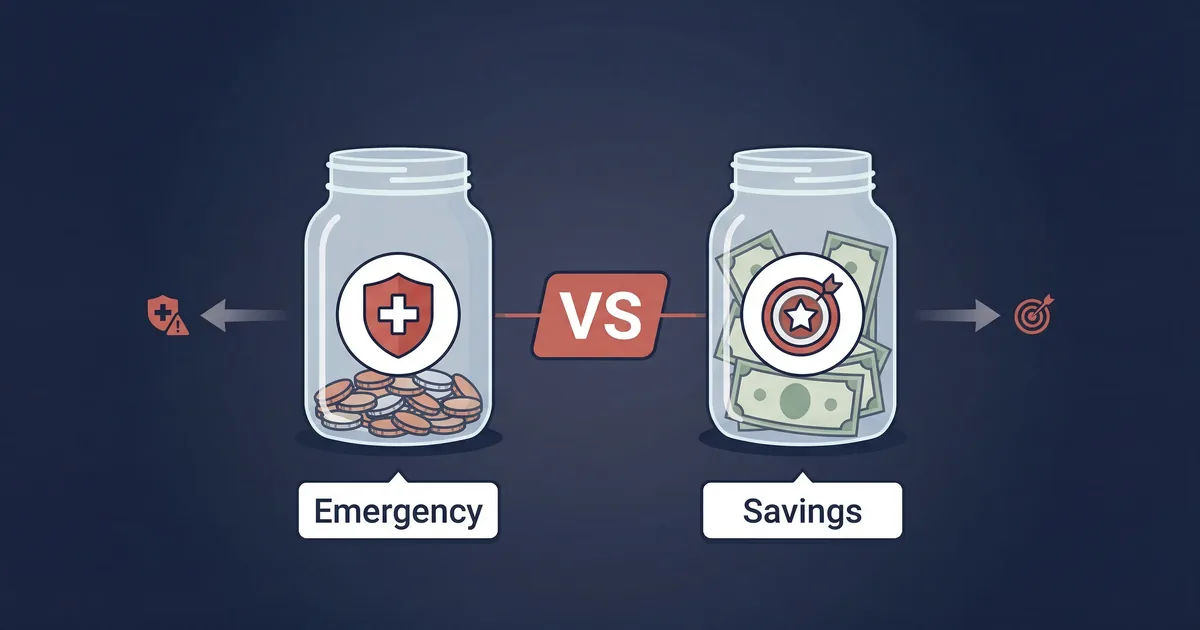
Many people use “emergency fund” and “savings account” as if they mean the same thing, but they serve very different purposes. Mixing them up is one of the most common money mistakes — and it can leave you unprotected when a real emergency happens.
The Key Difference
Savings Account: Money set aside for planned goals (vacation, new car, down payment, holiday gifts). You know these expenses are coming and save toward them intentionally.
Your Emergency Fund
Purpose
Your emergency fund is your financial safety net. It keeps you from going into debt when you face unexpected costs.
What Counts as an Emergency?
- Job loss or sudden income reduction
- Major medical or dental bills
- Urgent car repairs (not routine maintenance)
- Critical home repairs (burst pipe, broken furnace)
- Emergency travel for family crisis
What Does NOT Count?
- Holiday gifts (predictable — use a sinking fund)
- New phone or gadgets (wants, not emergencies)
- Sales or “too good to miss” deals
- Car insurance premium (predictable — budget for it)
- Annual subscriptions (predictable — budget for them)
How Much Do You Need?
| Situation | Recommended Amount |
|---|---|
| Dual income, stable jobs | 3 months of expenses |
| Single income household | 6 months of expenses |
| Self-employed / freelancer | 6–12 months of expenses |
| Unstable industry | 6–9 months of expenses |
| Starting out (minimum) | $1,000–$2,000 starter fund |
Your Savings Account
Purpose
Regular savings is for planned, specific goals. You know what you are saving for and about when you will use the money.
Common Savings Goals
| Goal | Timeline | Monthly Savings |
|---|---|---|
| Vacation ($3,000) | 12 months | $250 |
| New car down payment ($5,000) | 18 months | $278 |
| Holiday gifts ($1,200) | 11 months | $109 |
| Home down payment ($30,000) | 5 years | $500 |
| Wedding ($15,000) | 2 years | $625 |
Side-by-Side Comparison
| Feature | Emergency Fund | Savings Account |
|---|---|---|
| Purpose | Unexpected expenses | Planned goals |
| When to use | Only true emergencies | When you reach your goal |
| Target amount | 3–6 months expenses | Varies by goal |
| Accessibility | Instant (liquid) | Can be less liquid |
| Risk tolerance | Zero risk | Low to moderate |
| Best account type | High-yield savings (HYSA) | HYSA, CDs, or money market |
| Replenishment | Immediately after use | Restart for next goal |
| Emotional rule | Never fun to use | Exciting to reach |
Where to Keep Each
Emergency Fund
- High-yield savings account (HYSA): Earns 4–5% APY while remaining fully accessible
- Keep at a separate bank from your checking — this makes it harder to spend on impulse
- FDIC insured up to $250,000
Regular Savings
- HYSA: For goals less than 1 year away
- CDs (Certificates of Deposit): For 1–3 year goals — higher rates, less temptation
- Money market accounts: Higher rates with check-writing ability
- I-bonds: For 1–5 year goals with inflation protection
How to Build Both
- Start with a $1,000 emergency starter fund — save aggressively until you hit this milestone
- Pay off high-interest debt next (anything over 8% interest)
- Build emergency fund to 3 months while starting small savings goals
- Automate both — set up two separate auto-transfers on payday
- Grow emergency fund to 6 months as your income increases
Track Both Funds Easily
Use Budgeting365 to track your emergency fund and savings goals separately — with visual progress bars and category tracking, free and offline.
Download Budgeting365 — FreeFrequently Asked Questions
Can I use one account for both?
Not recommended. Separate accounts make it harder to spend emergency money on non-emergencies.
How much should be in my emergency fund?
3–6 months of essential living expenses. Self-employed or single earners should aim for 6–12 months.
Where should I keep my emergency fund?
A high-yield savings account at an FDIC-insured bank. It earns interest while staying fully liquid.
What counts as a real emergency?
Job loss, major medical bills, urgent car/home repairs, and emergency travel. Planned expenses and wants are not emergencies.
Should I build an emergency fund before investing?
Yes. Build at least $1,000–$2,000 first, then grow to 3–6 months while starting to invest simultaneously.