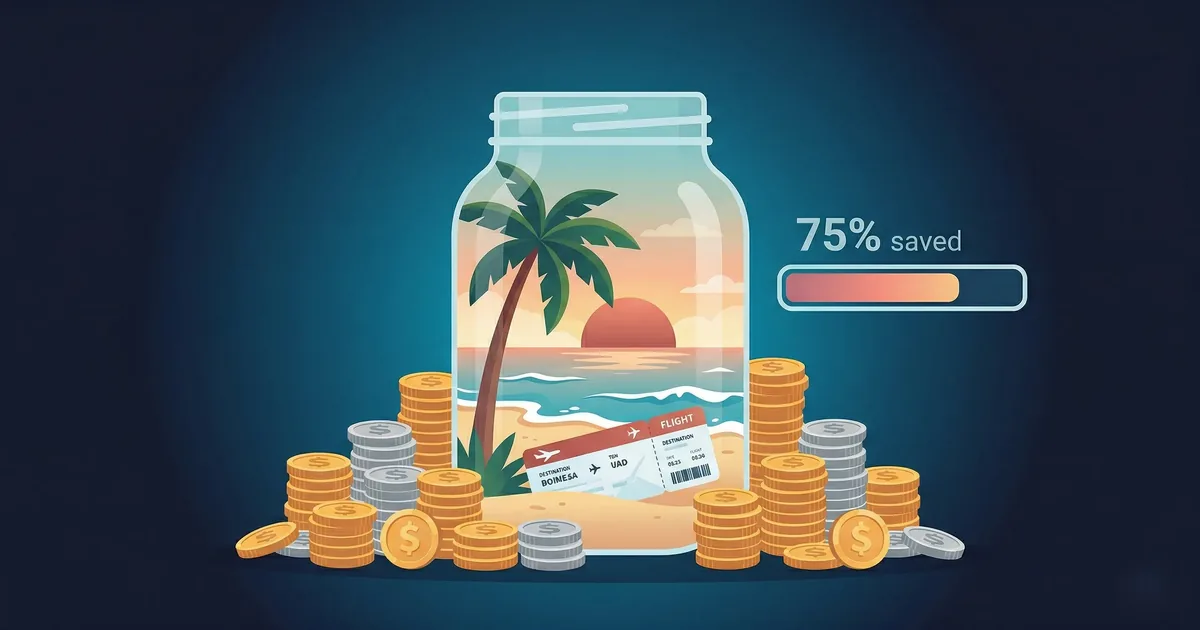
Americans spend an average of $2,000–$5,000 per vacation, and a third pay with credit cards. You can enjoy an amazing trip without money worries later. Here is how to save for a vacation the smart way.
Step 1: Estimate Your Trip Cost
| Category | Domestic Trip | International Trip |
|---|---|---|
| Flights | $200–$600 | $500–$1,500 |
| Accommodation (7 nights) | $700–$1,400 | $700–$2,100 |
| Food & Drinks | $350–$700 | $350–$1,000 |
| Activities & Excursions | $200–$500 | $300–$800 |
| Transportation (local) | $100–$300 | $150–$400 |
| Buffer (10–15%) | $150–$350 | $200–$580 |
| Total per person | $1,700–$3,850 | $2,200–$6,380 |
Step 2: Create a Savings Plan
Example: $3,000 trip in 10 months = $300/month
- Open a dedicated travel fund: A separate high-yield savings account keeps vacation money visible and out of your regular spending
- Automate transfers: Set up an automatic transfer on each payday to your travel fund
- Track progress: Use Budgeting365 to create a vacation savings goal and watch the bar fill up
- Adjust if needed: If $300/month is too much, extend your timeline to 12 months ($250/month) or reduce the trip scope
Step 3: Fund Your Trip Faster
- Sell unused items: Declutter electronics, clothes, furniture. Deposit 100% of proceeds into the travel fund
- Temporary side hustle: Freelance, dog-walk, or drive for a rideshare for 2–3 months leading up to the trip
- No-spend weekends: Commit to zero optional spending on weekends and move the savings to your travel fund
- Cash-back and rewards: Use cashback apps on everyday purchases and put the rewards into travel savings
- Meal prep: Cook at home for the months before the trip. Move the money you save on dining out to the vacation fund
- Round-up savings: Round every purchase up to the nearest dollar and save the difference automatically
8 Budget Travel Hacks
- Travel off-peak: Off-peak seasons (spring/fall) offer 20–40% lower prices and fewer crowds
- Use price alerts: Set flight alerts 3–6 months in advance and book when prices drop
- Stay in rentals: Apartments with kitchens let you cook some meals and save $50–$100/day on food
- Eat like a local: Street food, markets, and neighborhood restaurants cost 50%+ less than tourist-area restaurants
- Free attractions: Parks, beaches, walking tours, museums with free admission days
- Pack light: Avoid checked bag fees ($30–$60 each way) and move faster between locations
- Use public transit: Buses, trains, and metro are far cheaper than taxis and rideshares
- Book mid-week flights: Tuesday/Wednesday departures and returns are typically the cheapest
Start Your Vacation Fund
Create a vacation savings goal in Budgeting365 and track every dollar toward your next trip — free and offline.
Download Budgeting365 — FreeFrequently Asked Questions
How much should I save for a vacation?
Domestic: $1,500–$3,000 per person. International: $3,000–$7,000+. Always add a 10–15% buffer.
How far in advance should I start saving?
6–12 months. Divide total cost by months to get your monthly savings target.
Should I use a credit card for travel rewards?
Only if you pay in full every month. Carrying a balance at 20%+ interest erases all rewards.
What is the cheapest day to book flights?
Tuesday/Wednesday flights tend to be cheapest. Book domestic 1–3 months ahead, international 2–6 months ahead.
Is it okay to go into debt for a vacation?
No. Interest makes the trip much more expensive. Save first and travel debt-free.