Financial success is not about one big decision — it is about hundreds of small, repeated behaviors. The difference between building wealth and staying broke often depends on daily habits you barely notice.
The Science of Habits
Example: Cue = payday notification → Routine = transfer $200 to savings → Reward = watch savings balance grow.
10 Essential Financial Habits
| # | Habit | Frequency | Time Needed |
|---|---|---|---|
| 1 | Track every expense | Daily | 2 min |
| 2 | Check bank balances | Daily | 1 min |
| 3 | Pay yourself first (auto-save) | Per paycheck | 0 min (automated) |
| 4 | Review weekly spending | Weekly | 10 min |
| 5 | Plan meals for the week | Weekly | 20 min |
| 6 | Use a shopping list | Per trip | 5 min |
| 7 | Wait 24 hours on unplanned purchases | As needed | 0 min |
| 8 | Review and adjust budget | Monthly | 30 min |
| 9 | Check credit report | Quarterly | 15 min |
| 10 | Review financial goals | Quarterly | 20 min |
How to Build Financial Habits
1. Start Embarrassingly Small
The biggest mistake is trying to change everything at once. Start with one habit, make it tiny, and expand once it is automatic.
- Instead of “track all expenses,” start with “log one expense per day”
- Instead of “save $500/month,” start with “save $5/day”
- Instead of “cook every meal,” start with “cook dinner 3 times this week”
2. Stack Habits
Attach new financial habits to existing routines:
- After morning coffee → check bank balance (1 min)
- After lunch → log morning expenses in app (2 min)
- Sunday evening → plan meals and write grocery list (20 min)
- Payday → transfer savings, pay bills, review budget
3. Remove Friction
Make good habits easy and bad habits hard:
- Automate savings so you never have to remember
- Delete shopping apps from your phone
- Unsubscribe from marketing emails
- Keep your budgeting app on your home screen
- Leave credit cards at home and use cash for optional spending
4. Track Progress Visually
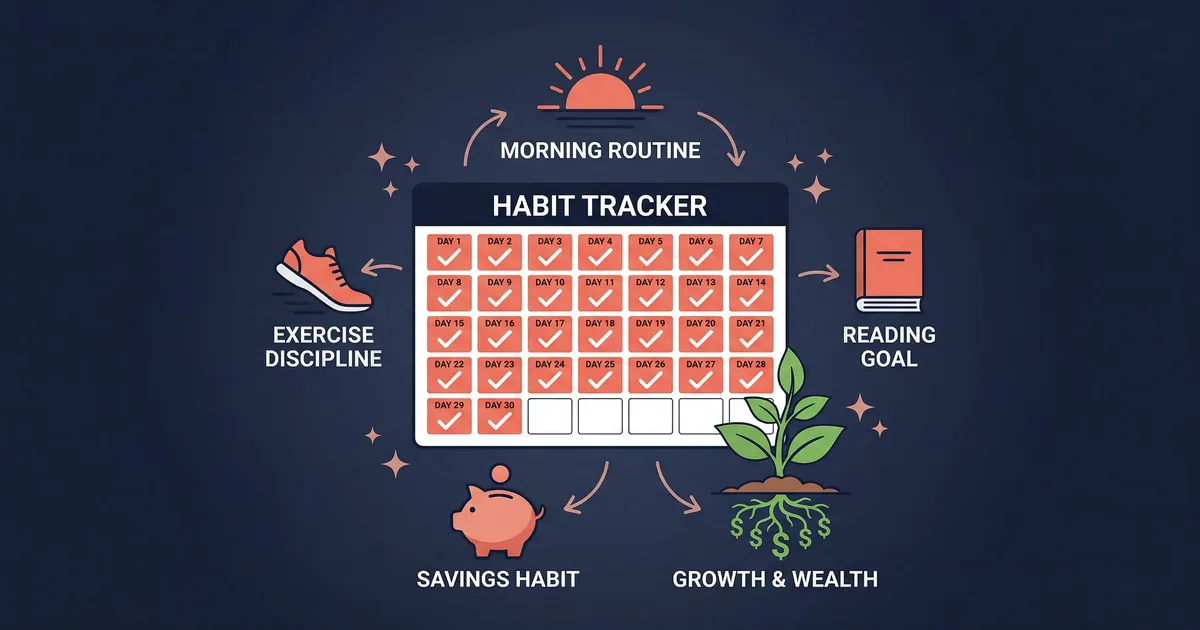
Use a habit tracker, savings thermometer, or app dashboard. Seeing your progress helps you keep going and makes the habit stronger.
Breaking Bad Financial Habits
| Bad Habit | Replace With | Monthly Savings |
|---|---|---|
| Daily coffee shop | Home-brewed coffee | $80–$120 |
| Impulse online shopping | 24-hour waiting rule | $100–$300 |
| Eating out for lunch | Packed lunches 3x/week | $60–$150 |
| Ignoring bank statements | Daily 1-min balance check | Prevents overdrafts |
| Paying only minimums | Extra $50–$100 on debt | Saves thousands on interest |
Build Your Money Habits
Budgeting365 makes daily expense tracking simple with one-tap logging, visual progress, and offline access — free forever.
Download Budgeting365 — FreeFrequently Asked Questions
How long does it take to form a financial habit?
About 66 days on average, not 21 as commonly believed. Expect 2–3 months of consistent practice.
What is the most important financial habit?
Tracking your spending. Once you see where money goes, every other habit becomes easier.
How do I stay motivated?
Tie your budget to specific goals, review progress weekly, celebrate milestones, and automate as much as possible.
What bad habits should I break first?
Start with the most expensive one. Track spending for 30 days to identify your biggest money leak.
Can I build good habits on a low income?
Absolutely. Many key habits cost nothing: tracking expenses, checking accounts daily, using shopping lists, and cooking at home.